
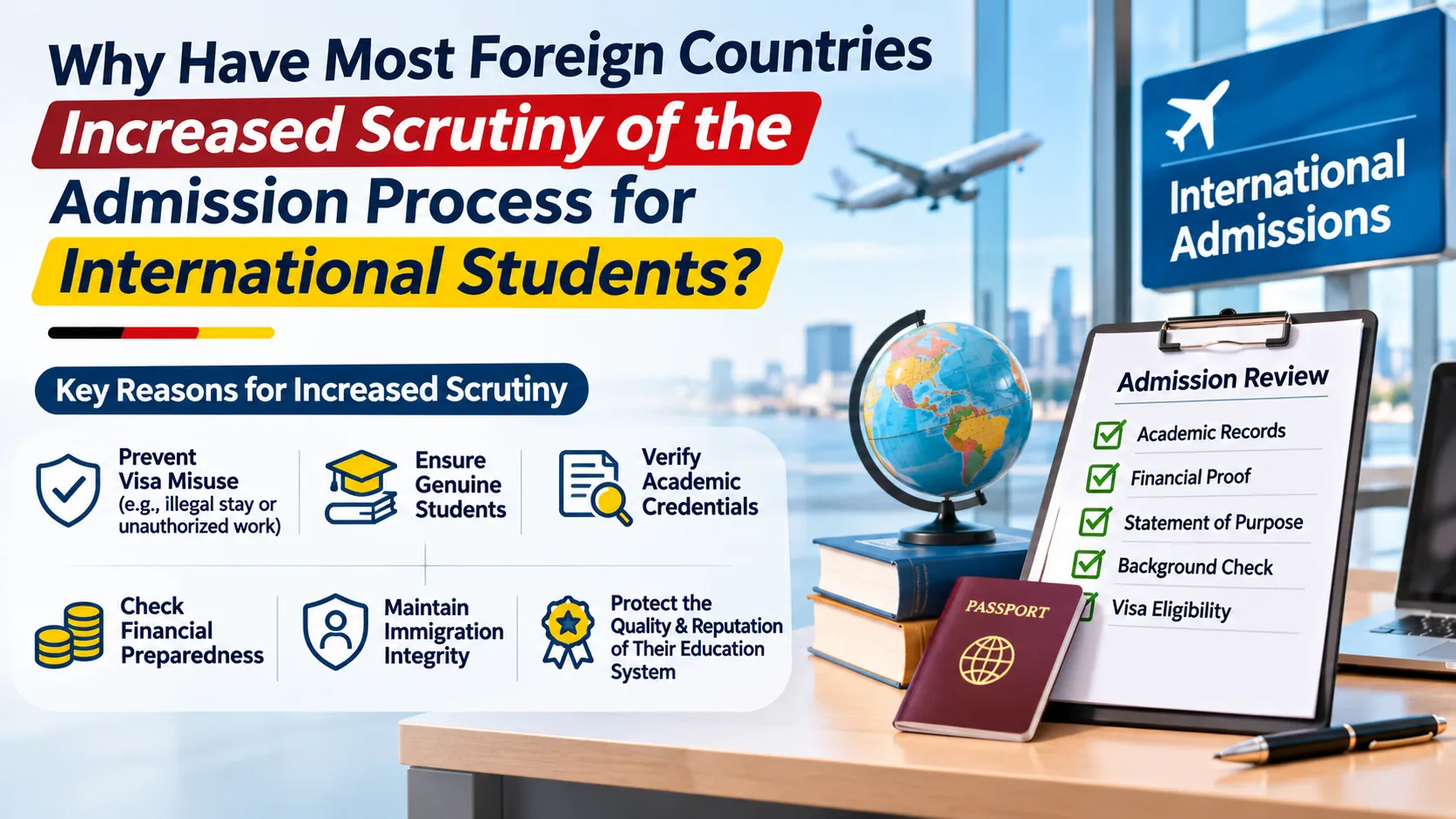
A few years ago, an offer letter and a bank statement were often enough. Today, a single weak answer in a visa interview can end an application. Across the major study destinations, governments have moved from welcoming volume to demanding quality, and the shift is reshaping how Indian students plan. Understanding international student visa rules is no longer optional. It is the first step in any study abroad journey.
Why Governments Are Tightening the System
Several pressures are driving the change:
Housing and population pressure: Rapid growth in student numbers has strained accommodation and public services
Net migration targets: Governments are under political pressure to reduce temporary arrivals
Misuse of student routes: Authorities cite "non-genuine" students, low-quality providers, and agent-driven fraud
Quality assurance: Universities with high dropout or visa refusal rates face closer monitoring
This does not mean destinations are closed. It means they are selective.
Key Updates to the UK's Student Visa Policy
UK student visa changes focus on compliance and post-study stay. From 1 January 2027, the Graduate route shortens from two years to 18 months for most bachelor's and master's graduates, though the Budget announced a two-year permission for graduates of universities that meet the government's requirements.
The government also plans a £925 annual levy per international student on providers, and universities face stricter Basic Compliance Assessment thresholds, tightened by five percentage points. Higher maintenance-fund requirements also apply. Universities now choose applicants more carefully because their own sponsor status depends on it.
What the Canadian Study Permit Cap Means for Applicants
The Canada study permit cap limits how many applications are processed each year. For 2026, Canada set a target of 408,000 permits, which is 7% lower than 2025 and 16% below the 2024 target. The government aims to keep temporary residents below 5% of the population by the end of 2027. Most undergraduate and college applicants need a provincial attestation letter (PAL), but from 1 January 2026, master's and doctoral students at public institutions no longer need one. The practical message: apply early, choose your level wisely, and ensure your documents are complete.
What the Latest Australian Visa Rules Mean for Students
Australia student visa new rules emphasise intent and proof of funds. The old test has been replaced: on 8 February 2026, the Genuine Student requirement replaced the Genuine Temporary Entrant test. Applicants must show at least AUD 29,710 for 12 months of living costs, and visa fees have risen to AUD 2,000 or more. Processing is also shaped by provider-level limits under Ministerial Direction 115 and a 2026 planning level of 295,000 new students. Reports also indicate that India has been moved to the strictest funds-evidence tier.
Common Reasons for Student Visa Refusals
The most common student visa rejection reasons are preventable:
Insufficient or unclear funds: Money that appears suddenly, or with no clear source, raises concerns
Weak genuine-student case: A generic statement of purpose or a course that does not fit your background
Inconsistent documents: Mismatched dates, names, or financial details
Unexplained academic gaps: Breaks in study or work without a clear reason
Poor English or interview performance: Inability to explain your course, university, and plans
Fraudulent or forged documents: This can lead to a long-term ban
Missing mandatory requirements: Such as a PAL for Canada, where applicable
Study Abroad Admission Requirements for Indian Students
Study abroad admission requirements for Indian students are broadly consistent across destinations, but the standard of evidence is higher than before:
Academic records: Transcripts and certificates, with explanations for any gaps
English proficiency: IELTS, TOEFL, PTE, or an accepted alternative
Statement of purpose: Specific, honest, and linked to your career goals
Recommendation letters: From academic or professional referees
Entrance tests: GRE or GMAT for certain programs
Financial proof: Clear, documented, and traceable funds
Passport and supporting documents: Valid and consistent
How to Strengthen Your Application
A credible application requires careful planning, consistent documentation, and a clear academic purpose. Addressing potential concerns early can strengthen your case and prevent avoidable refusals.
Choose a course that logically follows your education and career
Shortlist universities with strong compliance records, not just low fees
Prepare a clear explanation for any gaps
Keep financial documents organised and verifiable
Practise answering visa interview questions in your own words
Start early, because quotas and processing queues can fill quickly
How ManEd Global Helps You Prepare a Strong Study Visa Application
Stricter international student visa rules make professional guidance valuable for Indian students planning to study abroad. ManEd Global supports applicants through university selection, admission requirements, and visa preparation, helping them approach each stage with greater clarity.
University Shortlisting: Identify institutions and programmes aligned with your academic background and career objectives.
Admission Guidance: Understand eligibility criteria, application procedures, and destination-specific requirements.
Documentation Support: Organise academic records, financial evidence, statements of purpose and other essential documents.
Visa Preparation: Understand current immigration requirements and prepare for potential visa interviews.
Financial Planning: Review funding requirements and prepare appropriate financial documentation.
Application Review: Identify inconsistencies or missing information before submitting your application.
Planning to study in the UK, Canada, Australia, or another international destination? Connect with ManEd Global for guidance on university admissions, documentation, and student visa preparation.
Conclusion
To wrap up, governments are not closing their doors; they are raising the bar. Knowing the latest international student visa rules for your destination helps you apply with confidence and avoid costly mistakes. ManEd Global's counsellors can help you shortlist universities, prepare documentation, plan funds, and navigate the visa process.
Frequently Asked Questions
1. Why are countries tightening international student visa rules?
Governments are responding to housing shortages, migration pressures, fraudulent applications, and concerns about education quality. Stricter international student visa rules help authorities regulate student numbers and prioritise genuine applicants.
2. What are the major UK student visa changes for international students?
Recent UK student visa changes include revised Graduate route durations, higher financial requirements, and stricter university compliance standards. Applicants should review current immigration rules before selecting a university or planning their stay.
3. What is the Canada study permit cap?
The Canada study permit cap limits the number of study permits processed annually. It aims to manage temporary migration and housing pressure, making early applications and complete documentation increasingly important for international students.
4. What are the latest Australia student visa new rules?
The Australia student visa new rules require applicants to satisfy the Genuine Student test, demonstrate adequate financial capacity, and provide credible supporting documents. Provider-level enrolment limits also influence admission planning.
5. What are the most common student visa rejection reasons?
Common student visa rejection reasons include insufficient funds, inconsistent documentation, weak study intentions, unexplained academic gaps, inadequate English proficiency, and failure to meet mandatory immigration requirements.
6. Are study abroad admission requirements for Indian students becoming stricter?
Yes. Study abroad admission requirements for Indian students increasingly emphasise academic consistency, genuine course selection, financial transparency, English proficiency, and credible supporting documents across major international education destinations.
7. Does receiving a university offer guarantee a student visa?
No. A university offer confirms admission eligibility, not immigration approval. Visa authorities independently assess financial capacity, academic background, study intentions, and compliance with destination-specific international student visa rules.
8. How can Indian students reduce the risk of student visa rejection?
Students should select relevant courses, maintain verifiable financial records, explain academic gaps, and submit consistent documentation. Preparing thoroughly for interviews also helps address common student visa rejection reasons.
9. Do international students still have opportunities to study in Canada, the UK and Australia?
Yes. All three destinations continue accepting international students, although admission and immigration requirements have become more selective. Applicants must understand current policies and prepare applications that satisfy destination-specific criteria.
10. When should Indian students begin preparing their study abroad applications?
Ideally, students should begin 9–12 months before their intended intake. This allows sufficient time for university shortlisting, entrance tests, financial arrangements, documentation, and compliance with changing visa requirements.