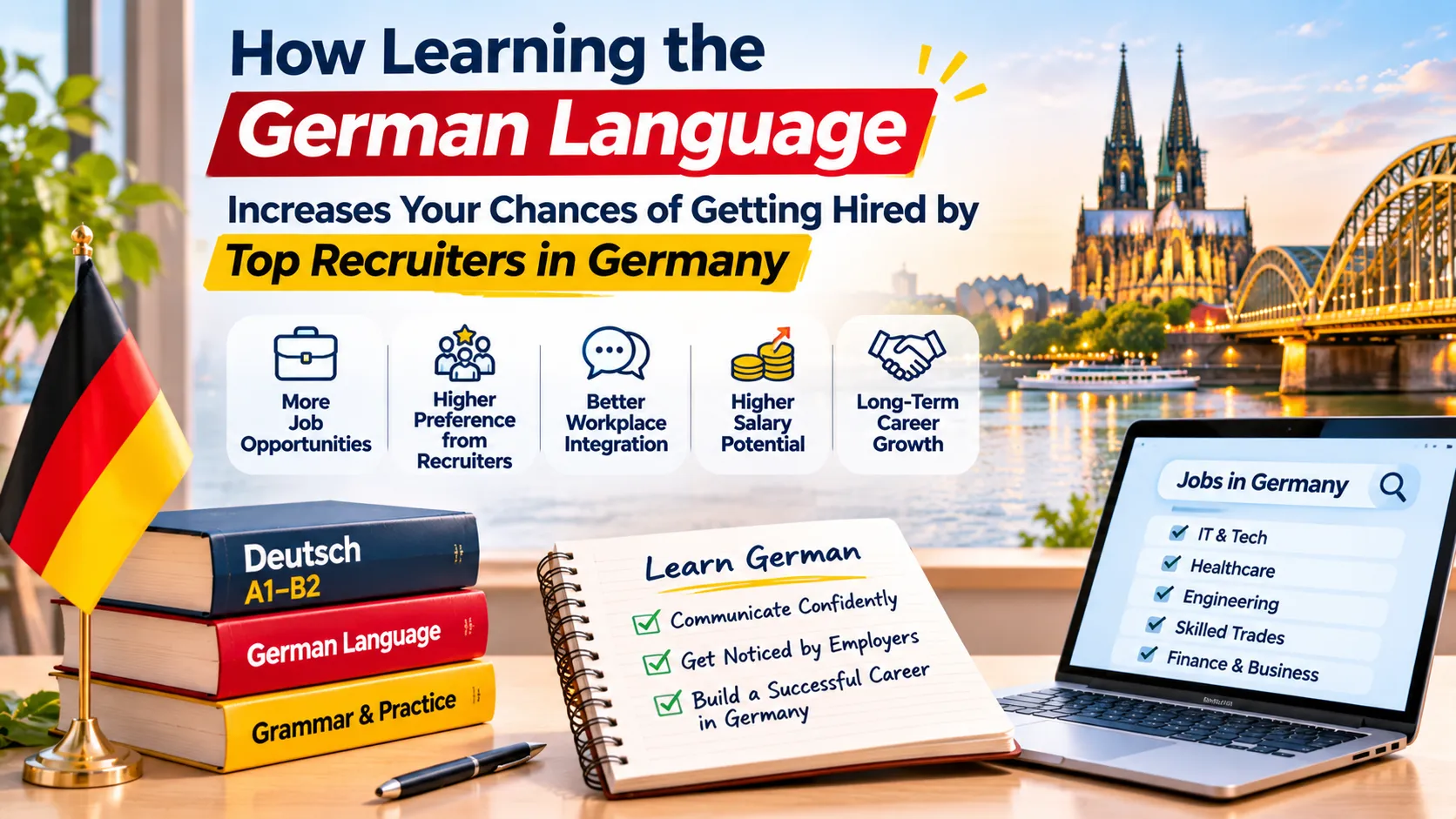
How Learning the German Language Increases Your Chances of Getting Hired by Top Recruiters in Germany
Two candidates apply for the same job in Munich. Both have the same degree. Both have three years of experience. Both have a polished CV. One adds a single line at the bottom: "German, B1 (Goethe-Zertifikat)." Guess who gets the interview call? In a country that values clear communication, language is often the tiebreaker, and sometimes the entire deal. If you want to stand out, the smartest investment you can make is to learn German for jobs in Germany before you land, not after.
Why Recruiters in Germany Care About German
Many people believe English is enough, and in some pockets it is. But most German workplaces run on German. Contracts, safety rules, meetings, customer calls, and lunch-table conversations all happen in the local language. Recruiters know that a candidate who speaks German will integrate faster, need less support, and communicate better with clients and colleagues. Even in international companies, a job listing in English can still require German; the language requirement is often buried near the bottom of the posting.
German Language Level for Jobs in Germany: A Quick Guide
The German language level for jobs in Germany depends on your profession. German is measured on the CEFR scale from A1 (beginner) to C2 (near-native). As a rough guide:
Field | Typical German level |
IT and tech (English-friendly teams) | A2–B1, helpful but sometimes optional |
Skilled trades and logistics | B1 |
Hospitality and retail | B1–B2 |
Nursing and healthcare | B2 minimum |
Doctors | B2 plus the medical language exam (Fachsprachprüfung) |
HR, sales, and client-facing roles | B2–C1 |
For nurses, German at CEFR level B2 is the minimum for recognition, and doctors must also pass a medical language test run by the German Medical Association. Requirements vary by employer and state, so check each job listing carefully.
Is B1 German for a Job Enough?
Many applicants ask whether B1 German for a job is sufficient. It depends:
B1 lets you handle everyday work conversations, understand instructions, and write simple messages. It is the standard minimum for many trades, Ausbildung programs, and entry-level roles.
B2 lets you discuss complex topics, follow fast conversations, and is expected for most professional and healthcare jobs.
C1 is common in client-facing, legal, or management roles.
Think of B1 as the door and B2 as the hallway. B1 gets you in, but B2 helps you move around confidently and get promoted.
Jobs in Germany for English Speakers: What Is Realistic?
Yes, jobs in Germany for English speakers exist, but they are concentrated in specific areas. Tech and software, research, finance, and start-ups often hire in English, particularly in cities like Berlin, Munich, and Frankfurt. Reports suggest that Berlin accounts for roughly 14% of English-language job postings, with Munich and Frankfurt around 11% each. Even so, candidates who add German usually have far more options, better salary negotiation, and an easier daily life. In regulated fields like healthcare, German is essential, not optional.
How German Helps Beyond the Job Offer
Learning German can make settling in Germany easier while improving your employment prospects, professional opportunities, and everyday interactions.
More employers: The pool of jobs open to you grows several times over
Faster recognition: Healthcare and other regulated professions need language proof
Visa advantages: Under the Opportunity Card's points system, German skills earn one point at A2, two at B1, and three at B2 or above.
Better career growth: Managers and team leads are usually expected to communicate in German
Easier life: Banking, rent, doctors' visits, and friendships become simpler
Goethe Certificate: The Gold Standard
The Goethe certificate (Goethe-Zertifikat) is the most widely recognised proof of German skills. The Goethe-Institut offers exams from A1 to C2, and these are accepted across all German states for B2. Other respected options include telc and ÖSD. For job-specific tracks, there are tests such as the Goethe-Test PRO Pflege for nursing. Always check with your employer or recognition authority which certificate they accept before booking an exam.
German Language Course for Indian Students and Professionals
Choosing the right German language course for Indian students (and working professionals) can save months. Look for:
Trainers who prepare you for Goethe, telc, or ÖSD exams
Batches that match your timeline (weekday, weekend, or intensive)
Regular mock tests and speaking practice
Job-specific modules, such as healthcare or technical German
Transparent fees and certification support
As a general guide, a motivated beginner studying 15 to 20 hours a week often reaches B2 in around 8 to 12 months, though pace varies.
How ManEd Global Can Help
Learning German becomes more effective when it is connected to a clear career plan. ManEd Global helps students and professionals prepare for opportunities in Germany through:
Guidance on selecting suitable German language courses
Language planning based on career requirements
Documentation and application assistance
Employer connection support
Visa preparation guidance
Planning to work or train in Germany? Connect with ManEd Global to align your German language goals with suitable career opportunities and prepare for your next step.
Conclusion
English may open a few doors in Germany, but German opens the whole building. If you want to stand out with recruiters, qualify faster, and settle comfortably, now is the time to learn German for jobs in Germany. Speak to ManEd Global to plan your language path and match it with the career you want.
Frequently Asked Questions
1. Is German necessary to get a job in Germany?
German is not compulsory for every job, particularly in international IT and research companies. However, speaking German increases employment options and helps candidates communicate effectively at work.
2. What German language level is required to work in Germany?
The required level depends on the profession. Many skilled roles accept B1, while healthcare, customer-facing, and managerial positions commonly require B2 or higher.
3. Is B1 German enough to get a job in Germany?
B1 can be sufficient for certain entry-level positions, skilled trades, and vocational training programmes. However, B2 generally provides access to more professional opportunities and workplace responsibilities.
4. Can I get a job in Germany without knowing German?
Yes, some companies hire English-speaking professionals, particularly in technology, research, and international business. However, candidates without German may face fewer opportunities outside these sectors.
5. Which German certificate is best for Indian students?
The Goethe-Zertifikat is a widely recognised option for demonstrating German proficiency. Other accepted certifications include telc and ÖSD, depending on employer and professional recognition requirements.
6. How long does it take to learn German up to B2?
A beginner studying consistently for 15–20 hours weekly may reach B2 in approximately 8–12 months. The actual duration depends on learning pace, practice and course structure.
7. Which jobs in Germany require B2 German?
Nursing, healthcare, teaching and several customer-facing professions commonly require B2 proficiency. Doctors may also need to pass a specialised medical language examination before receiving professional approval.
8. Are there jobs in Germany for English speakers?
Yes, English-speaking opportunities are available in IT, software development, research, finance and international start-ups. However, learning German can help candidates access a wider range of employers.
9. Which German language course should Indian students choose?
Indian students should consider courses offering structured A1–B2 preparation, qualified trainers, speaking practice and recognised examination preparation. The course should also match their career goals and relocation timeline.
10. Does knowing German improve my chances of getting hired in Germany?
Yes, German proficiency can make your application more competitive by demonstrating communication skills and readiness to work locally. It may also improve workplace integration and long-term career prospects.