
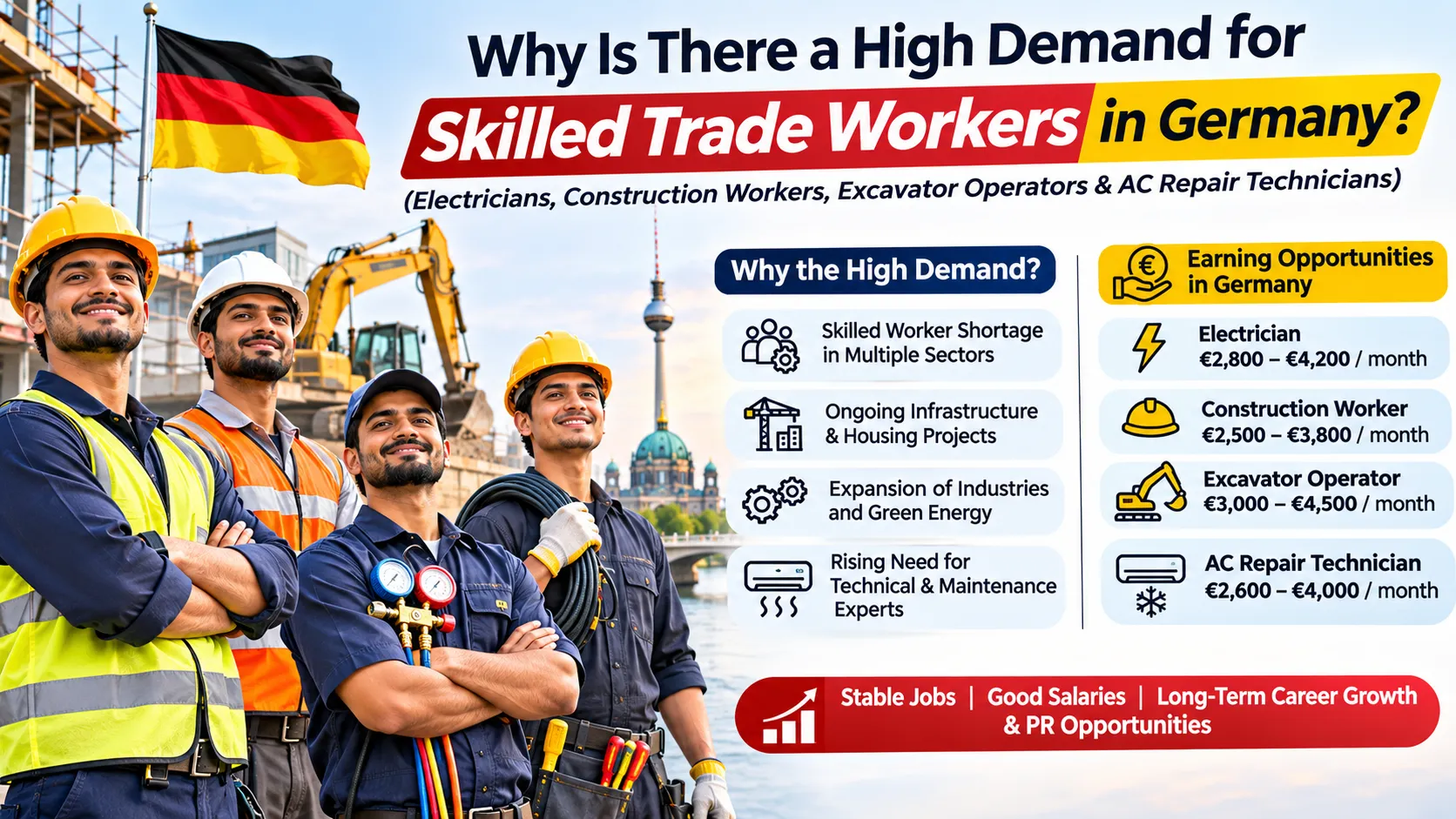
Why is there a high demand for skilled trade workers (such as electricians, construction workers, excavator operators, and AC repair technicians) in Germany, and what earning opportunities are available?
Germany is investing billions in wind farms, heat pumps, rail lines, housing, and smart grids. There is only one problem: someone has to build them. Engineers can design the future, but only tradespeople can install it. That reality is why skilled trade jobs in Germany are among the most reliable career pathways in Europe today, and why qualified Indian workers are being actively considered.
Skilled Worker Shortage in Germany: The Facts
The skilled worker shortage in Germany is structural. The population is ageing, and experienced tradespeople are retiring faster than young workers enter the field. According to the Federal Employment Agency, just under half of all skilled-level shortages are in the trades, particularly construction, plumbing, heating and air-conditioning, and electrical and mechatronics work. Filling one such vacancy takes 242 days on average. Research also identifies electrical construction as the biggest bottleneck in Germany's energy transition.
A caution: shortages have eased compared with three years ago because of economic weakness, although they remain pronounced in construction. Demand is real, but it is selective, and well-qualified candidates have the advantage.
How Much Do Electricians Earn in Germany?
Electrician salary in Germany is one of the strongest in the trades. Qualified electricians typically earn around €2,800 to €4,000 gross per month, with higher pay for specialists in solar, automation, and industrial systems, and for those with a master craftsman (Meister) qualification. Overtime, shift allowances, and collective agreements can raise income further. Electricians are especially needed for renewable energy, EV charging, and building upgrades.
Construction Sector Opportunities for Indian Professionals
Construction jobs in Germany for Indians exist across masonry, carpentry, roofing, scaffolding, concrete work, and site supervision. Entry-level and trained workers can expect approximately €2,500 to €3,600 gross per month, depending on region and qualification. Skilled workers must usually hold a recognised qualification or relevant training, and a working knowledge of German is essential for safety instructions. Beware of unofficial "agents" promising instant construction jobs; legal employment requires a proper contract and visa.
How to Find Excavator Operator Work in Germany
Excavator operator jobs in Germany are linked to infrastructure, road building, rail expansion, and housing projects. Operators can earn roughly €2,800 to €3,800 per month, with experienced machine operators earning more on large projects. Employers value certified training, safety awareness, and the ability to read plans and follow site rules. Machine-operator licences from India may need to be assessed or supplemented, so confirm requirements with the employer.
Building a Career in Germany as an AC Technician
AC technician jobs in Germany are growing alongside heat-pump installation and the shift toward efficient heating and cooling. Qualified refrigeration, HVAC, and climate technicians can earn about €2,800 to €4,000 per month. Because this work involves regulated refrigerants and electrical systems, formal training and certification carry significant weight.
Salary Snapshot
Trade | Approx. gross monthly pay |
Electrician | €2,800 – €4,000+ |
Construction skilled worker | €2,500 – €3,600 |
Excavator operator | €2,800 – €3,800 |
AC / HVAC technician | €2,800 – €4,000 |
These are indicative ranges. Actual pay depends on region, employer, experience, and collective agreements.
How Indians Can Apply: The Realistic Pathway
Indian applicants must meet Germany's qualification, language, and immigration requirements before pursuing trade employment. A structured application process improves their chances of securing legitimate opportunities.
Hold the right qualification. A recognised vocational qualification or proven practical experience is required.
Get your credentials assessed. Recognition procedures vary by trade.
Learn German. Aim for at least B1; many trades prefer more.
Secure a job offer. A genuine employer contract is central to the skilled worker visa.
Apply for the visa. Germany has made routes for Indians more accessible, raising its skilled work visa quota for Indians from 20,000 to 90,000 annually.
If you do not yet hold a formal trade qualification, an Ausbildung (paid vocational training) can be your entry point.
How ManEd Global Helps You Secure Skilled Trade Opportunities in Germany
Germany offers promising career pathways for qualified electricians, construction workers, excavator operators, and HVAC technicians. ManEd Global helps Indian applicants understand the available routes and prepare for the requirements of working or pursuing vocational training in Germany.
Trade and Ausbildung Guidance: Understand suitable vocational training programmes and career pathways based on your background.
Qualification and Documentation Support: Get guidance on educational credentials, document preparation, and recognition requirements.
German Language Preparation: Build the language proficiency needed for vocational training and workplace communication.
Visa Preparation: Understand the relevant visa procedures and documentation requirements before applying.
Career Planning: Identify suitable opportunities based on your trade, experience, and long-term professional goals.
Planning to build a skilled trade career in Germany? Connect with ManEd Global for guidance on Ausbildung, language preparation, documentation, and your next steps towards working in Germany
Conclusion
To summarise, Germany's expanding infrastructure and energy projects require qualified professionals across essential trades. For Indian candidates with recognised credentials, practical expertise, and adequate German proficiency, skilled trade jobs in Germany offer competitive earnings, employment security, and long-term career progression. Understanding qualification recognition, vocational pathways and visa requirements is crucial. Consult ManEd Global to identify a suitable route aligned with your professional experience and career objectives.
Frequently Asked Questions
1. Why is Germany facing a shortage of skilled trade workers?
Germany's ageing workforce, retirements, and expanding infrastructure projects have increased demand for qualified tradespeople. This skilled worker shortage in Germany creates opportunities across construction, electrical, HVAC, and mechanical occupations.
2. Are skilled trade jobs in Germany available for Indians?
Yes. Qualified Indian professionals can apply for skilled trade jobs in Germany if they meet qualification, recognition, language, and visa requirements. Relevant experience and a genuine employment offer improve their prospects.
3. What is the average electrician salary in Germany?
The electrician salary in Germany generally ranges from €2,800 to €4,000 gross monthly. Specialisation, professional experience, location, overtime, and collective agreements can influence actual earnings.
4. What qualifications are required for construction jobs in Germany for Indians?
Applicants generally need relevant vocational training, recognised qualifications, or demonstrable practical experience. Construction jobs in Germany for Indians also require sufficient German proficiency to understand instructions and comply with workplace safety standards.
5. How much can excavator operators earn in Germany?
Excavator operator jobs in Germany typically offer €2,800–€3,800 gross per month. Earnings depend on experience, machinery expertise, certifications, employer requirements, and the complexity of construction projects.
6. Are AC technician jobs in Germany in demand?
Yes. Heat-pump installations, energy-efficient buildings and modern climate-control systems are increasing demand for qualified technicians. AC technician jobs in Germany favour candidates with HVAC training, refrigeration knowledge and relevant certifications.
7. Is German language proficiency mandatory for skilled trade jobs?
German proficiency is important for understanding technical instructions, communicating with colleagues and maintaining workplace safety. Many employers prefer B1 or higher, although language requirements vary across occupations and companies.
8. Can Indians work in Germany without recognised trade qualifications?
Applicants without recognised qualifications may consider an Ausbildung, Germany's vocational training pathway. It combines classroom instruction with practical employment and can provide a structured route into skilled occupations.
9. What visa do Indians need for skilled trade jobs in Germany?
Indian applicants generally require an appropriate skilled worker visa, subject to qualification recognition and employment conditions. The specific route depends on their credentials, job offer, and applicable immigration requirements.
10. Can skilled trade workers build long-term careers in Germany?
Yes. Experienced tradespeople can progress into specialist roles, supervisory positions or master craftsman qualifications. Skilled trade jobs in Germany can also provide opportunities for professional development and long-term employment.