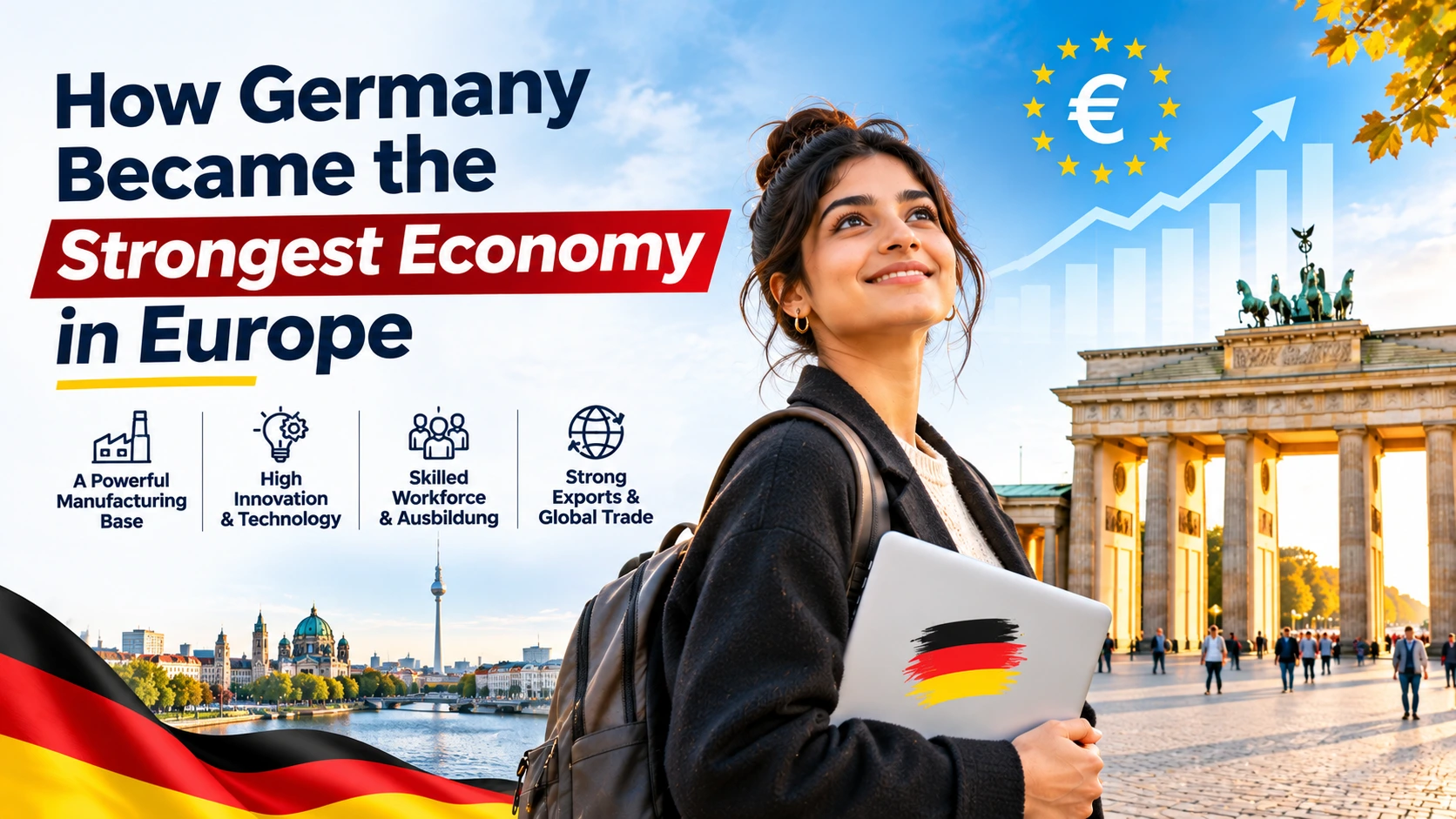
In 1945, Germany's cities lay in ruins, its factories were wrecked, and its future looked uncertain. Eight decades later, cars with German badges drive on roads around the world, German machines run factories on every continent, and its exports are among the largest on earth. How did a country rebuild itself into an industrial giant? The story of the German economy is one of engineering, discipline, and smart policy.
The Rebuilding: From Ruins to the "Economic Miracle"
After World War II, West Germany adopted a "social market economy" that combined free markets with social protection. A currency reform in 1948, strong industry, skilled labour, and international trade fuelled the Wirtschaftswunder, or economic miracle. Reunification in 1990 added new markets and workers, and Germany went on to become a core member of the European Union.
Largest Economy in Europe: Where Germany Stands Today
Germany is the largest economy in Europe, and it is also the third-largest economy in the world after the United States and China. It sits ahead of the UK and France, the next two European economies. Its position rests on a strong industrial base, high-value exports, and a deep network of companies that compete globally.
Germany GDP: The Numbers Behind the Strength
Germany's GDP was about $5.05 trillion in 2025, according to World Bank data. Growth has been slow in recent years because of high energy costs, global trade tensions, and weaker demand, and economists expect only a modest recovery. Even so, the sheer size and diversity of the economy keep it ahead in Europe.
Industries in Germany That Power the Economy
The industries in Germany that drive growth are known worldwide:
Automotive: Volkswagen, BMW, Mercedes-Benz, and a huge supplier network
Machinery and engineering: Precision equipment exported across the globe
Chemicals and pharmaceuticals: Companies such as BASF and Bayer
Electrical and electronics: Automation, sensors, and industrial technology
IT and software: SAP and a growing start-up scene
Renewable energy: Wind, solar, and green hydrogen
Healthcare: One of Europe's largest health and medical-device sectors
Much of this strength comes from the Mittelstand, thousands of family-owned mid-sized firms that are leaders in niche markets.
Why Germany's Economy Works: The Key Strengths
Germany's economic strength comes from several well-established advantages that support industries, businesses, and international trade:
Skilled workforce: Vocational training prepares workers with practical expertise.
Export power: Germany is a major global exporter.
Innovation: Strong investment supports research and technological development.
Central location: Access to the EU single market encourages trade.
Stability: Reliable institutions and legal systems support business confidence.
Germany Job Market for Foreigners
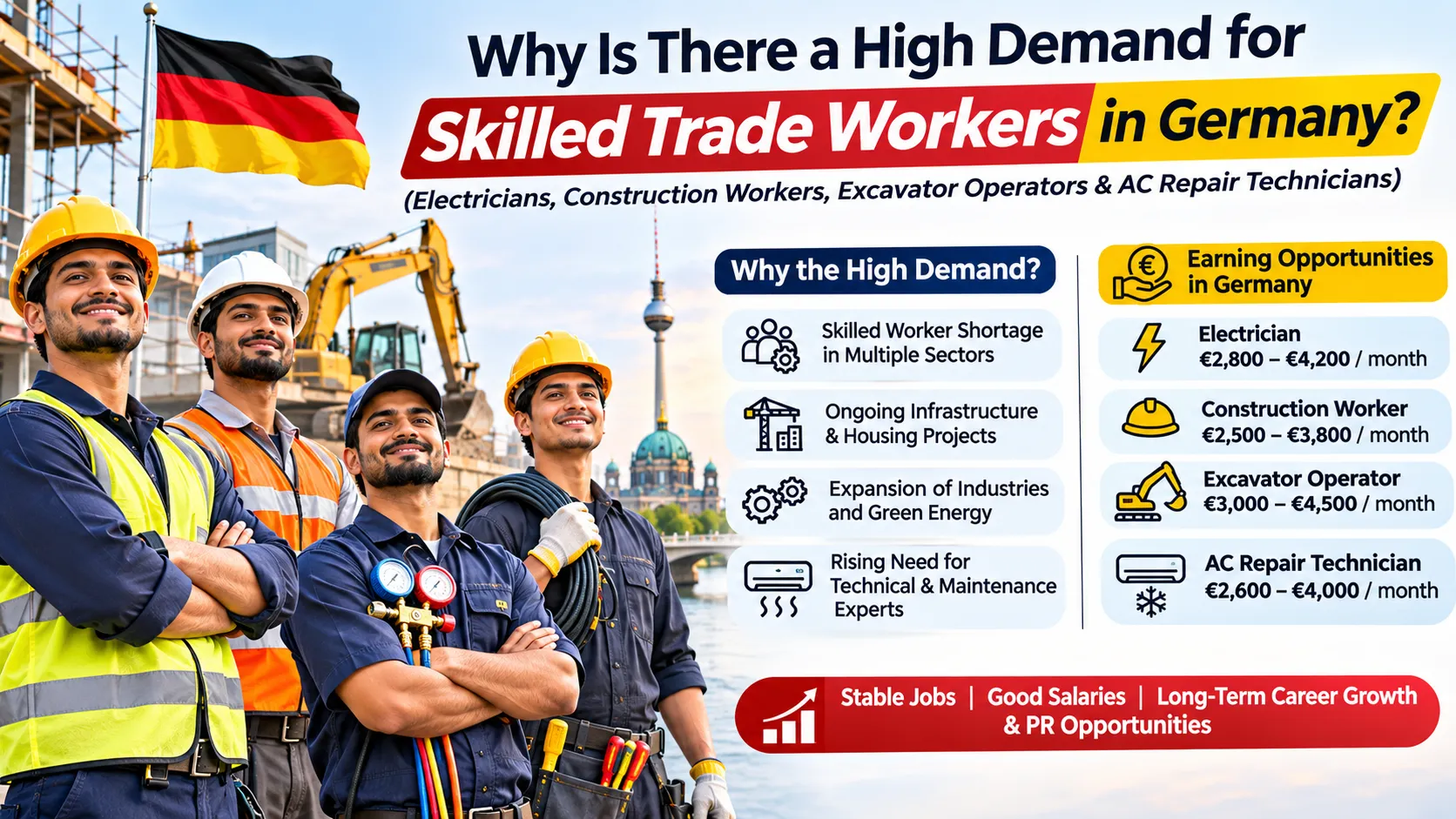
The Germany job market for foreigners is shaped by an ageing population and widespread skill shortages. Healthcare, engineering, IT, skilled trades, and logistics all look for international talent. Reforms to the Skilled Immigration Act, the EU Blue Card, and the Opportunity Card have made it easier to come to Germany to work or search for a job. German language skills still make a major difference, especially outside IT.
Why Study in Germany
Many students ask why study in Germany, and the economy gives much of the answer. Public universities charge little or no tuition for most programs, and the country's strong industry creates links between classrooms and employers. Graduates can usually extend their stay to look for work after studying. Strong engineering, technology, business, and science programs add to the appeal, and international students make up a significant share of the student body.
The Challenges Ahead
Despite its economic strength, Germany faces several challenges that could affect future growth. Rising energy costs, an ageing population, digital transformation and global competition are putting pressure on businesses. The country is investing in infrastructure, defence and renewable energy to address these concerns. These changes also create opportunities in technology, engineering, healthcare and skilled professions for international workers and graduates.
How ManEd Global Helps You Plan Your Germany Journey
Germany's strong economy offers opportunities for students and professionals across several fields. ManEd Global helps individuals explore suitable education and career pathways through:
Course selection: Identify programmes aligned with your academic background and career goals.
University guidance: Compare German universities and available study options.
Application support: Understand admission requirements and prepare documents.
Career planning: Explore pathways connected to Germany's growing industries.
Visa guidance: Receive assistance with student visa preparation and documentation.
Ready to explore opportunities in Germany? Connect with ManEd Global for personalised guidance on courses, universities, applications, and visa preparation. Visit the ManEd Global website to take the first step towards your future in Germany.
Conclusion
From rubble to Europe's industrial powerhouse, the German economy shows how skill, innovation, and steady policy can build lasting strength. Its size, its industries, and its need for talent explain why so many students and professionals are looking toward Germany for their future.
Frequently Asked Questions
1. Why is Germany considered the strongest economy in Europe?
Germany is Europe's largest economy because of its strong manufacturing base, skilled workforce, global exports, and technological innovation. Its automotive, engineering, chemical, and healthcare industries contribute significantly to economic growth.
2. What is Germany's GDP in 2025?
Germany's GDP was approximately $5.05 trillion in 2025, according to World Bank data. This makes it the third-largest economy globally, after the United States and China.
3. Which are the major industries in Germany?
Major industries in Germany include automotive manufacturing, mechanical engineering, chemicals, pharmaceuticals, IT, electronics, renewable energy, and healthcare. These sectors support exports, employment and the country's international economic position.
4. Why is Germany the largest economy in Europe?
Germany is the largest economy in Europe because of its industrial strength, skilled labour, export-oriented businesses, and established infrastructure. Its network of successful medium-sized companies also supports economic stability.
5. Is Germany a good country for foreign workers?
Yes, Germany offers opportunities for foreign workers in healthcare, engineering, IT, logistics, and skilled trades. Immigration pathways such as the EU Blue Card and Opportunity Card support eligible international professionals.
6. What is the Germany job market like for foreigners?
The Germany job market for foreigners offers opportunities across several sectors experiencing skill shortages. However, employment prospects depend on qualifications, professional experience, language proficiency, and the demand for specific occupations.
7. Why study in Germany as an international student?
Students consider Germany because of its affordable public university education, internationally recognised qualifications and strong industry connections. Its technology, engineering, business and science programmes also offer valuable career opportunities.
8. How does Germany's education system support its economy?
Germany's education system combines academic learning with practical training, particularly through its dual vocational model. This approach develops industry-ready professionals and helps businesses access workers with relevant technical skills.
9. What challenges could affect the German economy?
The German economy faces challenges such as rising energy costs, an ageing population, digital transformation, and international competition. Investments in infrastructure, renewable energy and technology aim to address these pressures.
10. How can ManEd Global help students planning to study in Germany?
ManEd Global assists students with university selection, course comparisons, admission requirements, application documents, and visa preparation. Its guidance helps international applicants understand available study options and plan their education journey.